|
|
|
|
|
|
|
|
|
Status of Pollinators 2007
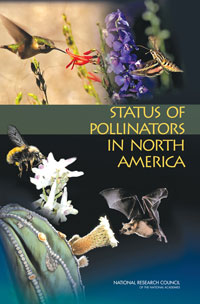
STATUS OF POLLINATORS IN NORTH AMERICA
Committee on the Status of Pollinators in North America
Board on Life Sciences
Board on Agriculture and Natural Resources
Division on Earth and Life Studies
NATIONAL RESEARCH COUNCIL OF THE NATIONAL ACADEMIES
THE NATIONAL ACADEMIES PRESS
Washington, D.C.
www.nap.edu
|
|
|
|
|
|
Small is Beautiful
It is typical of the mystery of nature that small deeds make profound impacts. None more-so than the work of our diminuative neighbors, or rather 'partners', called insects. Ironic as well, is the realization that these creatures, many of which have borne the social stigmas of pests to be feared or eradicated, should turn out to be some of our greatest allies. The small deeds of people to protect and provide habitat for these creatures can also be profound.
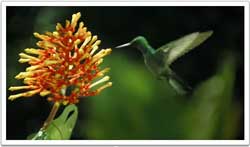
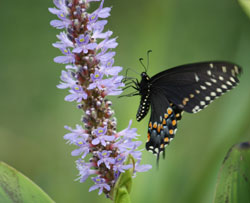
According to the USDA, "Three-fourths of the world’s flowering plants and about 35 percent of the world’s food crops depend on animal pollinators to reproduce. Some scientists estimate that one out of every three bites of food we eat exists because of animal pollinators like bees, butterflies and moths, birds and bats, and beetles and other insects."
NRCS - Natural Resources Conservation Service
|
|
|
|
|
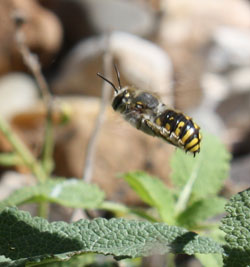
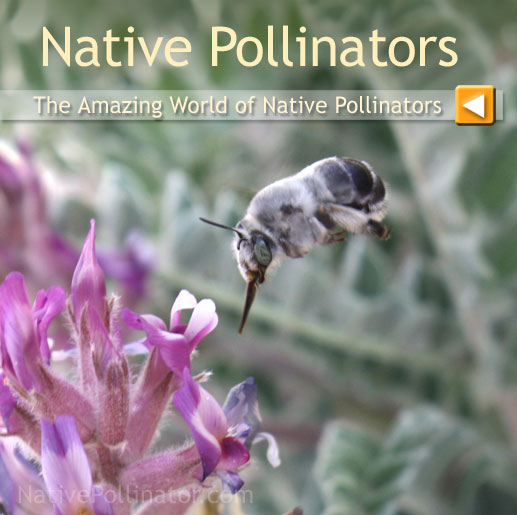
Native Bees
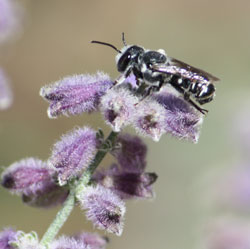
A growing interest in native pollinators, specifically bees, is partially a result of massive public awareness about the decline of European honeybees world wide. Continued research into the cause of honeybee decline, called 'colony collapse disorder' or CCD, as well as support of native pollinator species can help to promote a healthy and vibrant population of these hard-working organisms.
Xerces "red-list" of native bees
|
|
|
One of the rarest bees in North America, discovered thanks to Great Lakes Native Bee Inventory
WISCONSIN – This summer, scientists with the USDA Forest Service made a remarkable discovery on the Lakewood half of the Lakewood-Laona Ranger District of the Chequamegon-Nicolet National Forest.
August 13, 2019
U.S. Forest Service
|
|
|
|
|
What is to be done?
Reduce the use of industrial pesticides where possible. If you must use them, do so according to the manufacturers directions, and preferably when there is no wind, or even at night when pollinating bees and butterflies would not come in direct contact with the chemical as it's being applied.
Excerpt from: The plight of bees August 2010
MARLA SPIVAK* - University of Minnesota, St. Paul, Minnesota
ERICMADER, MACE VAUGHAN - Xerces Society for Invertebrate Conservation, Portland, Oregon
NED H . EULISS , JR . - U.S. Geological Survey, Jamestown, North Dakota
www.extension.umn.edu/
Protection from Pesticides
A factor that can be addressed at multiple levels is the use of pesticides. In particular, while extensive literature exists on the sublethal effects of insecticides on bees in the laboratory, little exists on sublethal effects to colonies under natural conditions. Common insecticides such as neonicotinoids and pyrethroids have been shown to affect learning, foraging activities, and nest site orientation by honey bees at sublethal doses.
Individual farmers and homeowners have the ability to mitigate harm to pollinators through simple changes in application methods such as avoiding treatments around blooming plants or to areas where bees are nesting. Evening spraying when bees are less active is another simple, underutilized way to reduce harm. The best course of action, and the one most accessible to gardeners, for whom insect damage is cosmetic rather than economic, is to eliminate the use of pesticides entirely.
The Need for Habitat
The third major challenge facing bees is a lack of season-long food sources, especially in agricultural landscapes where, if bee-pollinated plants even exist, they typically consist of large monocultures like cranberries, canola, or almonds, which provide only a few weeks of abundant food followed by a season-long dearth. Roughly 360 million hectares, or more than one-third, of the lower 48 states are managed as private cropland, pasture, or rangeland. This makes agriculture the largest land use activity in the country and thus one with the most potential impact on bees.
Specific habitat guidelines for all of these landscapes (rural, urban, roadside) vary across regions. Baseline habitat guidelines encourage the inclusion of at least 3 different plant species that bloom at any given time during the growing season (spring, summer, fall), with more being even better. For planting recommendations, visit: www.xerces.org/pollinator-conservation
EPA - Pollinator Protection
|
|
|
|
|
Preserving natural habitat is ideal, however many young communities do not have the old growth type woodlands to support large and diverse number of native pollinators. Some pollinators can travel long distances such as butterflies, bats, hummingbirds and moths, but other cannot. Many small mammals such as chipmunks and voles live in a relatively smaller area, as do many bees and wasps which are also important pollinators. Preserving wild areas even on smaller properties can be an important oasis to pollinators.
|
|
|
|
| Plant native species of wildflowers and herbs appropriate for your geographic location. Native pollinators need native plants. In many cases, the pollinator may require a specific host plant, or more amazing, the plant and the pollinator have co-evolved so as to each attain their needs in the relationship. Learn more about native plants and organizations such as Native Seed Search and Seed Savers |
|
|
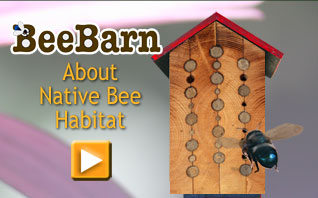
| Place native bee houses in your garden or orchard. Bee Habitat! Provide nesting houses for native bees such as yellow-faced bees, plasterer bees, leafcutter bees, blue orchard bees and other mason bees. |
|
|
|
|
| . |
|
|
|
|
|
|
Million Pollinator Garden Challenge
|
 |
|
|
|
|
|
|

 Ants
Ants